Black and White Village Trail
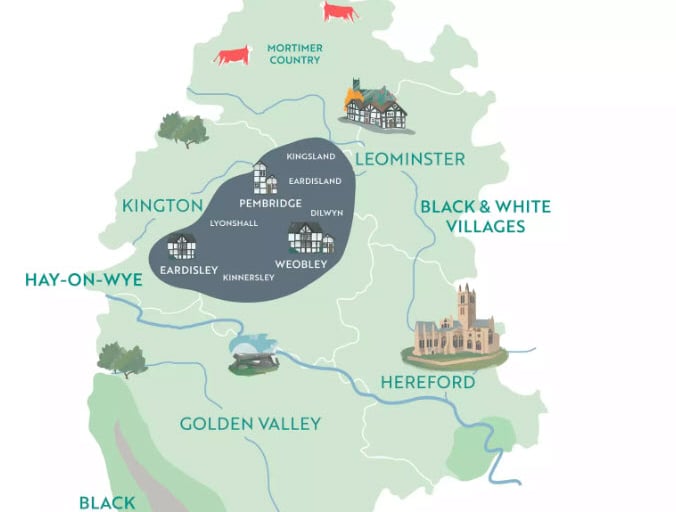
Despite growing up in a small village in mid-Wales, just 50 miles to the north west, I had never heard of The Black and White Villages trail. Click here for more information. On this cold and blustery April day, Terry, Wendy and I decided to set off in the car and follow part of the 40 mile trail to find out what the fuss was about. We drove to Eardisland for our first taste, and found an archetypally quaint English village, complete with Church, pub and an old stone bridge over a churning river.
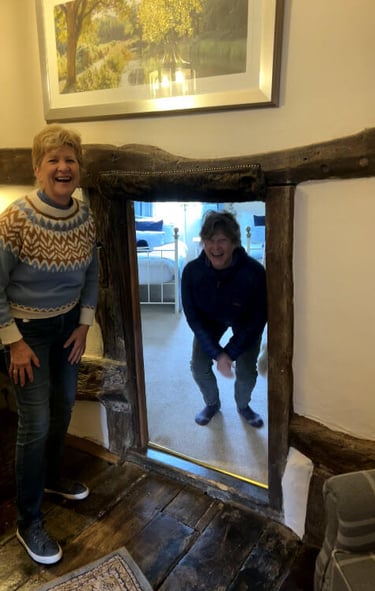
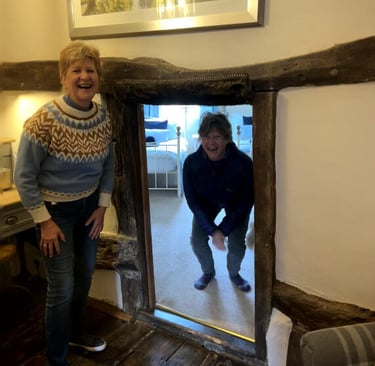
A few miles on we found ourselves in Pembridge and decided to take up Ian’s suggestion to call on Dawn, one of his childhood friends. Dawn welcomed us in and was very pleased to show us around. The cottage has been in her family for generations, a family of cobblers. She no longer lives there, but rents it out as a holiday let. And it was crossover day which is why she was there, getting it ready for the next guests. The cottage is delightful with its authentic wooden beams and quirky features such as the tiny doorway connecting the landing to one of the bedrooms.
Thanking Dawn and bidding her farewell, we continued on into the village, taking a walk around the churchyard of St Mary’s, featuring its steeple on the ground in the churchyard. The history behind that is that the steeple was feared to be too heavy for the supporting girders, so it was constructed at floor level instead. It certainly made it easier to toll the bells on a Sunday, beckoning one and all to the Church service.
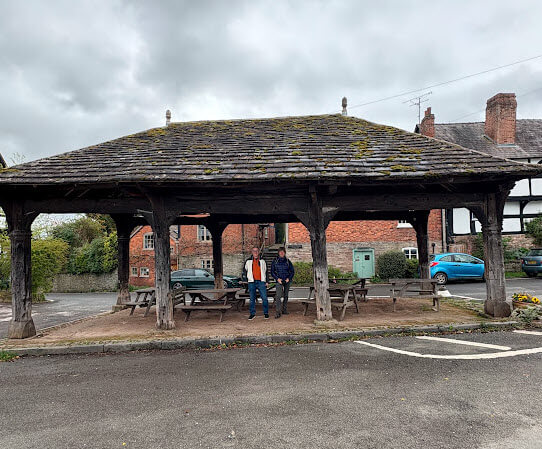
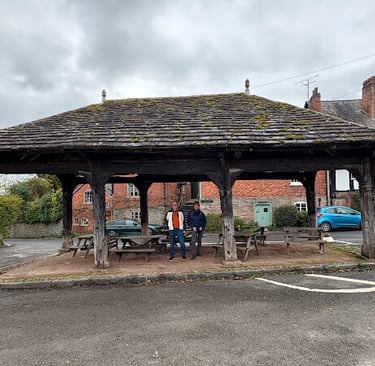
We took shelter for a while underneath the ancient covered market place. This is where the farmers would gather from miles around to show their wares and sell their sheep under cover from the wild weather…some of which we were sampling today!
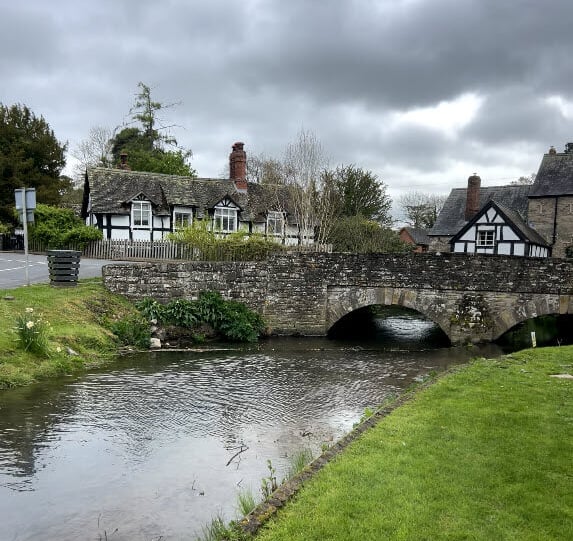
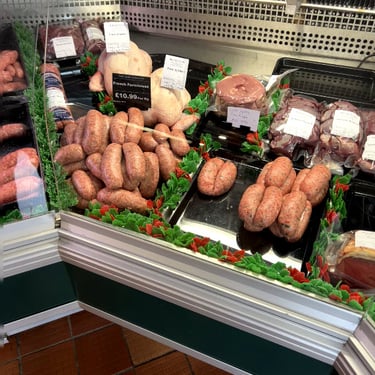
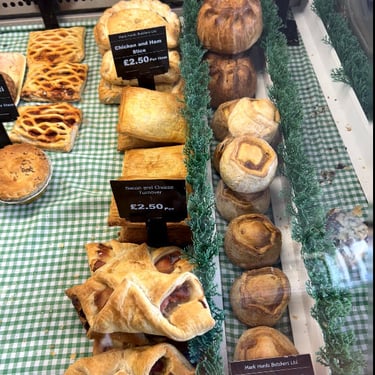
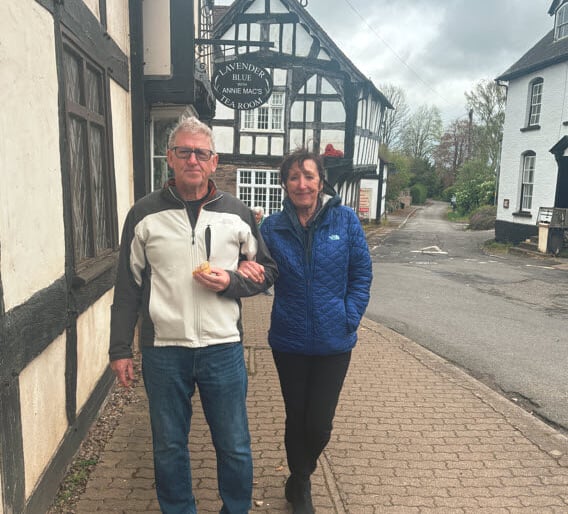
Driving on to the village of Weobley, we stopped for a nice cup of tea and a scone in one of the many teashops, and warmed up before exploring the village further. Looking back at the photos we took that day, there are a surprising number of the wares of the butcher shops and bakeries. We didn’t realize we missed those so much!
Fun fact: If you are a Hamnet fan, this village and the surrounding area is where the movie was set.
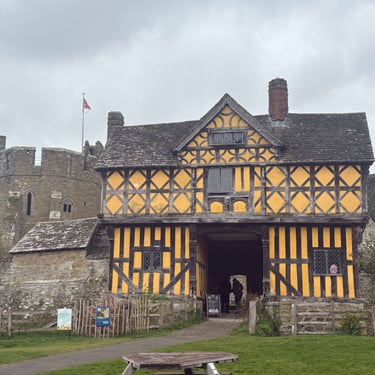
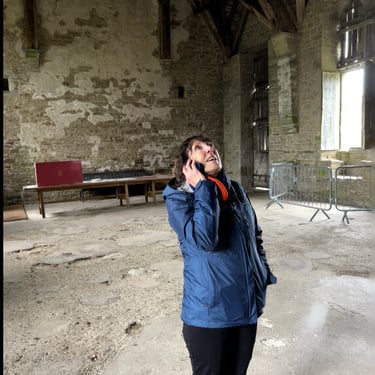
We could have spent the entire day touring the villages of the black and white trail, and certainly an electric bike and a warmer day would have enticed us to do so. However, with the wind howling, we decided to succumb to the call of history and to finish the afternoon with a visit to Stokesay Castle. Click here to read more on Stokesay Castle The rental of headphones to get the audio-guided tour is a must, since the wealth of stories that are associated with Stokesart54fy Castle are to be heard to be believed. It was easy to imagine the elaborate banquets that took place in the main dining hall, observable by the ladies -in-waiting from the chambers above through from peekaboo windows. As easy to imagine as the clans of marauding Welsh warriors teeming over one of the surrounding hills to lay siege to the castle, only to be fired upon with bows and arrows from the battlements on high.
We spent a couple of hours at Stokesay, and would have spent longer if the hunger pangs were not so strong. Setting off for home, we made the mistake of talking about our favorite comfort foods and so could not resist pulling into a passing pub and hastening to peruse the menu.
The Mortimer Cross Inn is a 13th Century building set in the heart of Herefordshire positioned near the site of the Battle of Mortimer's Cross, a pivotal 1461 Wars of the Roses battle, and the rich historical background had Terry entranced.
My interest was ambushed by the aromas coming from the kitchen and I put my order in pronto.
The most delicious baked potato topped with cheddar cheese and baked beans, a true comfort-food if ever there was one.



reach us on Social Media
JOIN OUR LIST
info@rusticbritain.com
(978) 412-0019
© 2025. All rights reserved.